Wednesday, April 5, 2017

LAD #37 Brown v. Board of Education

Image result for brown v. board of education

Brown v. Board of Education challenged the prior Plessy vs. Ferguson case that stated that separate but equal facilities were constitutional. In Topeka Kansas, a young, black student named Linda Brown was required to walk three miles each day to get to her school, even though there was a school much closer to her home. The closer school was mandated to be for white students only. For Brown, and many like her, this rule was very unfair, given the proximity of the white school to her home—she was prohibited to attend the white school simply because of her skin color. The school board claimed they were just being realistic and suggested she just learn to accept the segregation. Her parents disagreed and argued that it was wrong to segregate their child in this manner. Ultimately the case made it to the Supreme Court where the judges had to determine if it violated the fourteenth amendment or not, as it related to equal rights. The final decision stated that it actually was unconstitutional since it discriminated against the girl solely because of her skin color.


Image result for civil rights act of 196410 years after the victory in Brown v. Board of Education, the Civil Rights Act of 1964 was signed, outlawing discrimination based on race, sex, religion, or other.


Monday, March 27, 2017

LAD #36 Truman Doctrine

Image result for truman doctrine
Following the hostilities of WWII, a battle of ideologies broke out between the United States and the USSR. Both nations wanted to assert their power and their governmental influence over the developing countries around the world. This was essentially capitalism vs. communism. The Truman Doctrine concerns the developments in post-war Greece. After the war, the country was in deep depression and disillusionment. The Soviets blockaded Grecian interests and prevented reconstruction, as well as staging a few terrorist attacks. With relation to the inaction of Britain and the UN, Truman asserted the need of the US to supply food and finance to the Greek nation so that they would have the aid they needed in their struggling country. Also addressed was the fact that Turkey needed to be spurred on in democratic ideas and win the majority in a post war nation. As a result, the US would be safeguarding freedom and democracy around the world. This led Truman to ask Congress for 750 million dollars and a contingency of American military men for Greece and Turkey for modernization.


Image result for Korean warThis is similar to when the United States militarily tried to aid Korea and stop Communism.


Monday, March 13, 2017

LAD #35 Executive Order #9066

Résultats de recherche d'images pour « executive order 9066 »
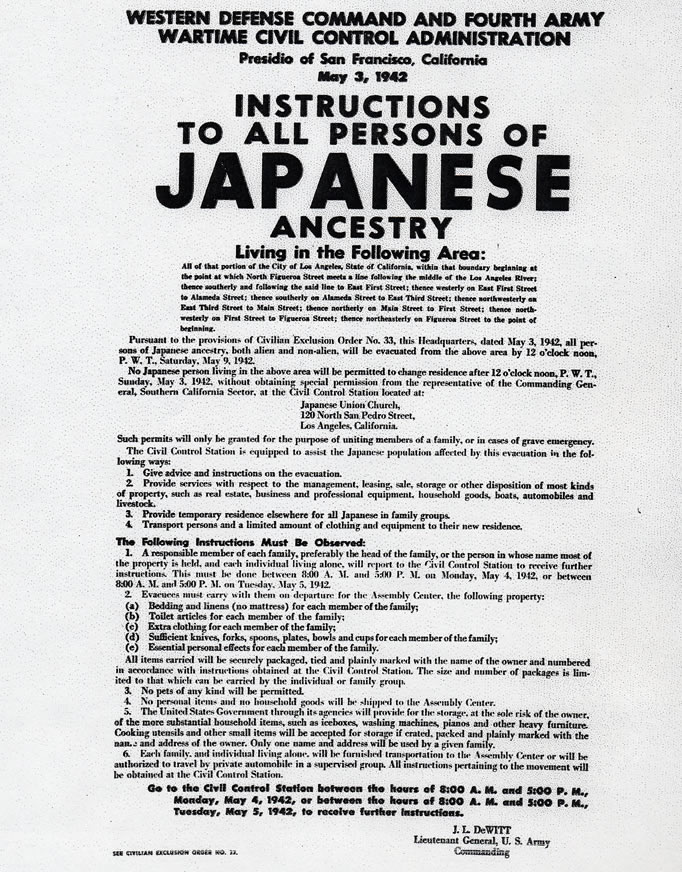
On the grounds that the success of WWII depended on the prevention of foreign espionage in the United States, President Franklin Delano Roosevelt declared that the Secretary of War is authorized to construct military areas in which "any or all persons may be excluded", and gave the Secretary discretion to who should enter these areas. Additionally, FDR stated that the Secretary is authorized to provide food, transportation, shelter, and other accommodations for these groups. The Secretary was also granted power to enforce compliance with these laws by use of federal troops. This extreme executive order was brought of due to the panic after Pearl Harbor, and the tensions created between many Americans and Japanese Americans.


Résultats de recherche d'images pour « jim crow laws »This is similar to the Jim Crow laws only recently outlawed in America. This was used to separate and isolate a specific race, and created a lot of racial tension.

LAD #34 FDR's Declaration of War

Résultats de recherche d'images pour « fdr's declaration of war »

On December 7th, 1941, Pearl Harbor was bombed by the Japanese. President Roosevelt made a request to Congress for America to declare war against Japan to protect their citizens. Roosevelt had absolute confidence in two things: First, that American armed forces were superior, and second, that the people of the nation would come together to fight against the Japanese. The President asked Congress to consider what might happen if the Japanese were not punished for their harmful actions against the United States. Roosevelt insisted that the Japanese attack on Hawaii, as well as the other aggressive acts occurring, like Midway and Hong Kong, meant that the Japanese had no intent of a peace treaty with the US. Roosevelt insisted that war was necessary to protect the American people. With this, The US entered WWII, but also helped pull us out of the Great Depression.


Résultats de recherche d'images pour « madisons declaration of the war of 1812 »This is similar to James Madison's declaration of war against the British in the War of 1812 after the US grew weary of the British still holding influence over them.

Friday, March 3, 2017

LAD #33 FDR's First Inaugural Address


A little over 80 years ago, President Franklin Delano Roosevelt gave his first inaugural address when he first came into the presidential office. His goal was to tell everyone the entire truth of what the Great Depression meant for the country and its people. He assured Americans that it did not have to be as damaging as it was perceived as so far. Overall, his address was very optimistic, though he kept it realistic. He did acknowledge that the country was in devastation at the time being. He also acknowledged every problem in the country that led to the depression, knowing that once they were brought to light, they could begin to be solved. His suggested solutions included decreasing the cost of the government as well as making farmed goods more valuable. He concluded by saying that the United States had not failed as a democracy, but elected a strong leader to pull them out of a crisis.


Lincoln, like FDR, during his second inaugural address, took over the presidency in a time of turmoil and scared citizens. And like FDR, Lincoln did an outstanding job of assuring the people that they would be okay, and he would help them out of a scary time.

LAD #32 Kellogg-Briand Peace Pact


The Kellogg-Briand Peace Pact was passed in 1928 by several countries, including Germany, France, and the United States. This eventually turned out to be a complete failure, though it began with high hopes and good intentions. The idea was that the treaty would encourage a more peaceful way of dealing with conflict diplomatically with the countries that signed, rather than barbarically go to war immediately. The United States became the unofficial leader of this agreement as it progressed, and allowed other nations to join the treaty. However, there was something fundamentally wrong with this pact. Any international agreement can only be successful if it has international military support to back it up. This, unfortunately, did not. Without military support, they could not enforce the pact if a country decided to break it.


One of many reasons that the League of Nations failed is because it had no military support, like the Kellogg-Briand Peace Pact.


Saturday, February 11, 2017

LAD #31 Wilson's 14 Point Plan

Image result for wilson's 14 points


At the conclusion of The Great War, President Wilson drafted a solution that he had hoped would maintain peace with all nations and truly keep to his campaign "A war to end all wars". Wilson's goal was to end the war in a forgiving and charitable way. With this in mind, he came up with the 14 Point Plan. 14 idealistic approaches which he hoped he could maintain postwar. Most important was his last point, the proposition of the League of Nations, a peacekeeping organization with representatives from all nations.

1. Public diplomacy and negotiations
2. Absolute freedom of the seas
3. Removal of economic barriers and creation of equality in trade
4. Reductions by all nations of their armies to the lowest point consistent with public safety
5. Adjustment of colonial claims to the interests of both the inhabitants of the colonies and the colonial powers
6. Russian independence and evacuation of it's territory by other powers
7. Evacuation and restoration of Belgium as independent
8. Evacuation of France and the return of the Alsace-Lorraine territory to France
9. Readjustment of Italian borders
10. Independence of multiple nationalities in Austria-Hungary
11. Evacuation of the Balkan states and allowance for them to be independent along lines of established nationality.
12. Protection of minority states in Turkey and free passage through the Dardanelles by all nations
13. Independence for Poland, including free access to the sea
14. A "League of Nations" should be formed to allow security for large and small powers alike.

Later on, Wilson's 14 points proved to be rather unsuccessful, as the other Allies found them to be too lenient, and they wanted a more severe punishment for their German foes. As a result, he was forced to compromise practically all of his 14 points except his most cherished League of Nations.


Image result for lincoln's ten percent planThis is similar to Lincoln's 14 Point Plan because many were not satisfied with the lenience of the plan, and desired a harsher punishment for the perpetrators.
Wednesday, February 8, 2017

LAD #30 Schenck v. United States

Image result for charles schenck

Charles Schenck, and American Socialist, began spreading posters and mailing draftees about dodging the draft at the start of The Great War. Schenck believed that the draft was a direct violation of the thirteenth amendment, as he interpreted it as demanding "involuntary servitude". He urged his targets to support his cause by petitioning the Conscription Act. Because of this, Schenck was charged with promoting insubordination in the military as well as violating the espionage act, which declared it illegal to interfere with military efforts, war efforts, or recruitment. During the trial, Schneck argued that he maintained the freedom of speech with the first amendment, making his efforts legal. However, the court decided against him in a unanimous decision, saying that in this case he did not maintain freedom of speech as it presented a "clear and present danger". Many recognized that during a war time such as this, the government expanded its power over the people. This decision was later overturned.
Image result for sedition act of 1918The Sedition Act of 1918 limited freedom of speech far past what was normal. It made it illegal to cast one's personal opinion on governmental action. Thousands were prosecuted over this before it was overturned.

Thursday, January 19, 2017

LAD #29 Keating-Owen Child Labor Act

Image result for keating owen child labor act

The Keating-Owen Child Labor Act was passed in 1916 in response to the census of 1900, saying that two million children were working in the United States. The bill was passed based on the power that the government had on the regulation of interstate commerce. Overall, it prevented children under a certain age to work in certain conditions. Children under 16 could not work in mines, at night, or for more than eight hours a day. This was ruled unconstitutional in Hammer v. Dagenhart by the Supreme Court on account of the fact that it overstepped the government's purpose of regulating interstate commerce.


Image result for fair labor standards actThe Fair Labor Standards Act of 1938 also helped create child labor laws, as well as normal labor laws.

LAD#28 Wilson's Inaugural Address

Image result for woodrow wilson

Woodrow Wilson first took office in 1912. In his inaugural address, he discussed the changes that had been occurring in the previous government. The majority of the government representatives at this point were Democratic, meaning the government would be very efficient in passing lows because they shared opinions. Wilson believed that this was a good idea because it was a fresh new ideology to run the country by. He believes that life in America had improved, but there was still suffering, and at times the government would disregard this for economic advancements. He also promises to resolve important issues including the financial system, tariffs, big businesses, workers rights, and sanitation. He believed that with the democratic populous in the government, the country would benefit.


Image result for fdrFranklin Delano Roosevelt was also very successful in getting a lot done with Congress, as both were also democratic.


LAD #27 Clayton's Anti-Trust Act

Image result for claytons antitrust act

The Clayton Anti-Trust Act of 1914 was another action by the government to restrict big businesses. This was created to break up big trusts and monopolies that were harmful for american competition and industry. This act made it illegal to discriminate prices between products and services of similar value if it promoted a monopoly or other big business tactics that were corrupt. This also prevented big businesses and companies holding large portions of certain industries to dramatically change their prices with the intention of driving out competition to create large monopolies. Additionally, other countries could no longer buy large portions of stock of corporations or businesses. Overall, the power of big businesses were weakened, and the power of the federal government was strengthened.

Image result for shermans antitrust actThis is like the Sherman Antitrust Act, that also moved to eliminate trusts and monopolies of big businesses.

Monday, January 16, 2017

LAD #26 MLK's "I Have a Dream" Speech


Image result for martin luther king jr


In Martin Luther King Jr.'s "I Have A Dream" Speech, he begins by referencing the act of former President Abraham Lincoln--sighning the Emancipation Proclamation and freeing the slaves. This was a huge step in the right direction for many African Americans, but according to MLK, they are still not truely free. King lists many issues that African Americans face during this tumultuous time period. He makes the analogy that they are "cashing a check" at the capitol--their right to life, liberty, and the persuit of happiness. He continues the check analogy by saying that they are getting the message that there are "insufficient funds". He encourages his fellow advocats to keep cashing the check because the "bank of liberty cannot go bankrupt". He stresses that the time for change is now, and his acts of civil disobedience will continue until they see change. He restresses that no acts of violence or crime should be committed under the name of equality. Finally, he proceeds to the most well known part of his speech. He has many dreams, like for his children to live in a country that "does not judge them based on the color of their skin, but the content of their character". Lastly he references the famous patriotic song "My Country 'tis of Thee". His dream is for "freedom to ring" everywhere in America.


Image result for aint i a woman speechThis speech is similar to Sojourner Truth's "Ain't I a Woman?" speech because it demands equality and justice for all, not just white men.

Friday, December 23, 2016

LAD #24 Bryan's Cross of Gold Speech

Image result for bryan's cross of gold speech

William Jennings Bryan delivered his famous "Cross of Gold" speech in 1896 at the Democratic National Convention in Chicago, as he was trying to be the party's nominee. This speech regarded his opinion of the silver to gold ratio of 16 to 1 in the American economy. By doing this, farmers in debt would be aided because of an increase of currency in circulation. Bryan considered this to be a humane and just cause for Americans. He prefers to clear the waters rather than fight. He argued that America is a country for the people, and believes that he is representing the general people when he states his goal for the coinage of silver. He also supports distributing wealth and an income tax. He conceded that many city people support the gold standard, but reminded them that wealth comes from the poor.


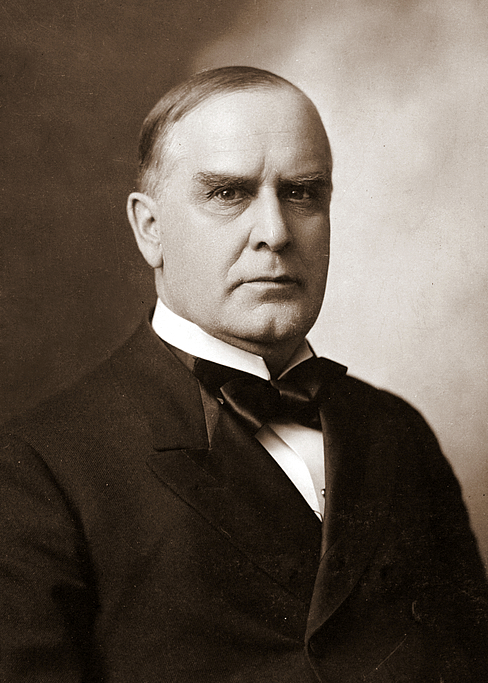
Image result for mckinleyPresident McKinley supported the gold standard, which Bryan opposed, saying "they will crucify us on a golden cross"


LAD #23 Populist Party Platform

Image result for populist party


The Populist Party was created in reaction to industrialization and big business abuses. It emerged from the Farmers Alliance in the 1800s, and was a third independent party, separate from Democrats and Republicans. They were primarily Southern farmers that struggled to compete with massive businesses. Populists believed that the working class was being denied basic rights and liberties, and supported the formation of workers unions. They opposed immigration because incoming immigrants took jobs that would have been available for Americans. They also believed in an increase in the power of the government and the free coinage of silver and gold in the ratio of 16 to 1. They supported an income tax, and increase in the circulation of wealth, and the formation of a permanent union of workers to oppose unfair business practices. All in all, they were fighting for more power to the working man.
Image result for workers unionWorking unions across America found aligned political views with the Populist Party, such as the Utility Workers Union of America.

Thursday, December 22, 2016

LAD #25 The Dawes Act

Image result for dawes act

The Dawes Act, otherwise known as the Dawes General Allotment Act, was passed by Congress in 1887, regarding the Indian Policy. The law focused on how reservations would be divided into sections of land assigned to individuals. Each head of the family was fiven one quarter of a section. Each individual person over the age of eighteen, as well as an orphaned child under the age of eighteen was assigned one sixth of a section. Lands that werenot given to Indians were open to settlement by others, as well as the continued development of the railroad. Evem of a Native American did not live on a reservation, they were still entitled to their allotted plot of land, and would receive a patent for it, protected by the government. The act emphasized individual land ownership, which contrasted the unity and culture previously held by many Indians living in communal villages. In a way, The Dawes Act can be seen as an attempt to assimilate and further deprive the Native Americans of their land, and put it to use for infrastructure, roads, bridges, and railroads.


Image result for indian removal actThis is similar to the Indian Removal Act, because both were created in attempt to move Native Americans away from the land where they had currently resided to land that was convenient for the government, so that they could expand to land previously occuppied by Indians.

LAD#22 McKinley's War Message

Image result for mckinley's war message

McKinley originally sent a message to Spain begging that they cease war with Cuba. The American Ambassador in Spain replied with a message that Spain had accepted this. However, this did not last long, and the United States ended up plunging into the war on the side of the Cubans. Addressing Congress, McKinley said that the conflicts between Cuba and Spain had caused the US great annoyance and effort. Their trade and investments in Cuba had been lost as well. He recalled a previous address that he had made, and said that he understands now that a proclamation of neutrality in all worldly affairs may not be always the best choice. He asked to propose a "rational compromise" to both sides, then said that United States intervention on no particular side would be justified. He summarized the grounds of intervention in four points: First, to end war for the sake of humanity, and that it is, in fact, our business because it is our neighbors. Second, we owe it to Cuban citizens to grant them the freedoms enjoyed in America. Third, the halt of commerce, trade, and business is harmful to both the US and the people of Cuba. Fourth, conflict in Cuba directly affects US peace and is a threat to the protection of American citizens. He gave an example of this by reflecting on the tragedy of the battleship Maine in the Port of Havana. He concludes by saying that this conflict cannot be solved through present methods, and he asks Congress to authorize the President to take measures to stop the hostilities between Spain and Cuba.


Image result for cuban missile crisisThe Cuban Missile Crisis is similar to McKinleys War Message because the United States was affected by the activities of Cuba, its close neighbor. However, during the Cuban Missile Crisis, the US and Cuba were distinctly against each other.

Friday, December 9, 2016

LAD #21 Carnegie's Gospel of Wealth

Image result for carnegie


Carnegie begins by addressing how civilization has changed from there not being a huge difference between the "chief" and his "retainers", but how the castles of todays billionaires versus the cottage of the laborer is vastly different. He considers this essential for humanity. He poses the question of "why is the wealth of few a good plan?" and promises to answer that, saying that it should be competence, not wealth, that people should want to acquire. A surplus of wealth can be acquired in three ways: left to the family, used for public works, or administered during the lives by the wealthy. He believed the first way was unjust and not beneficial to the family. He is not entirely supportive of the second either, because the wealth could be used in a way the giver did not intend, he has no power over it. However, he does support the taxation of a wealthy estate after death. This encourages the rich to distribute their wealth in their lifetime as opposed to leaving it to the state. This was Carnegie's preferred method of money management. He also supported the unequal distribution of wealth. The wealth of all the minority spread to the majority, which is beneficial for the masses. Overall, Carnegie believed that the duty of the wealthy was to distribute his wealth for the common welfare and set an example for his dependents.


Image result for mark zuckerbergMark Zuckerberg is similar to Carnegie in that he made a fortune, but was very generous with his wealth, and is a known philanthropist.

Sunday, November 27, 2016

LAD #20 Emancipation Proclamation

Image result for emancipation proclamation

On January 1st, 1863, Abraham Lincoln stated that all slaves would be free in the United States, and everyone should recognize them as a free people. He also determined that any states or counties holding slaves would henceforth be in rebellion of the United States. He asked that people abstain from violence, and suggested that the freed slaves work for a fair wage. He also welcomed the newly freed slaves into the United States armed forces.


Image result for frederick douglassThe Emancipation Proclamation is the dream of Frederick Douglas coming true. He desired a nation where the African American community was free, which was granted by Abraham Lincoln in 1863.

LAD#19 Lincoln's 2nd Inaugural Address

Image result for lincoln's 2nd inaugural address


Lincoln's 2nd Inaugural Address was shorter and more blunt than the first. He said that the public was aware of the events in the country as much as he did. Both parties clashed and one would rather destroy the country with war and the other would accept war rather than let the country fail. He discussed how slavery was the primary cause of this war and had been worse than both sides had predicted. Then he talked about how both sides prayed to the same God, but he had not answered their prayers, and had his own plan. He concludes by promising to finish the war and repair the nation.


Image result for franklin delano roosevelt inaugural addressFranklin Delano Roosevelt was faced with controlling and comforting the country during WWII, just as Lincoln had to in the Civil War.

Sunday, November 20, 2016

LAD #18 Dred Scott Decision

Image result for dred scott


In the case of Dred Scott v. Sanford, the court originally leaned towards Sanford. They selected Justice Nelson to write the opinion of the majority, but upon its presentation, it was discovered that his "majority" was just himself. They then changed to have Chief Justice Roger Taney write the majority. First, Taney addressed the issue of citizenship. Saying that African Americans were never truly citizens, and the right to sue in a court of law was reserved for American citizens, Scott actually had no right to sue, as he was not a United States citizen. Taney then went on to say that the Missouri Compromise was unconstitutional because slave owners above the 36 30 line were being deprived of their right to property in the form of slaves. Finally, he said that Dred Scott was still not a free man upon his stay in Illinois, because he had brought suit in Missouri, a slave state. Taney dismissed the court for lack of jurisdiction and sent it back to the lower courts.


Image result for 3/5 compromiseThe Dred Scott decision is like the 3/5 Compromise because is reasoned that African Americans were not citizens, and could not be considered in activities reserved only for United States citizens.